Cammini Bizantini, where time slows down, and traces become visible

Sometimes, to know a place, it's not enough to just arrive. You need to be inside it. Walk it. Let it change you.

The Cammini Bizantini arise from this attitude: not to cross the landscape, but to give it time to cross you. From a long history, from a living silence, from a heritage still listening.

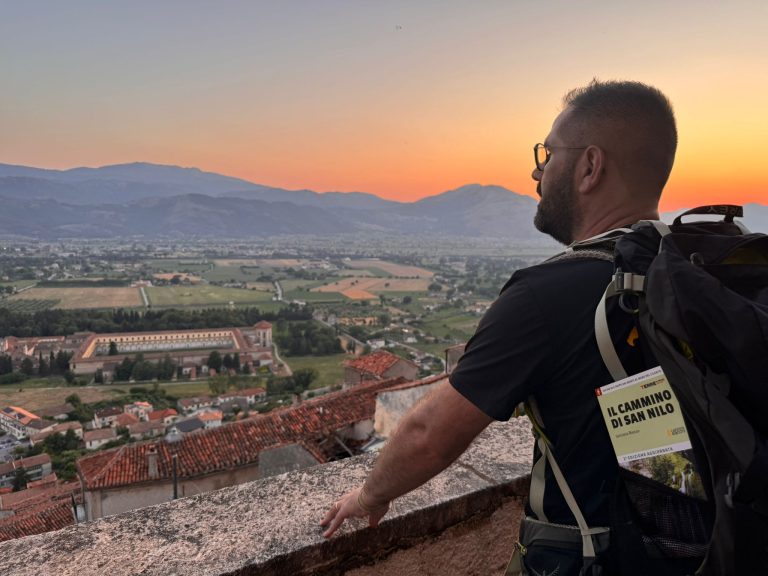
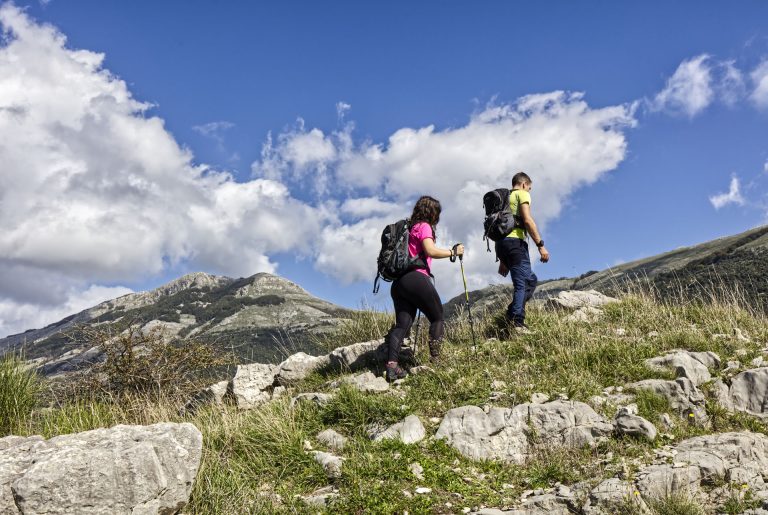
They are not just hiking trails, but narrative spaces, where every step reties a bond: with nature, with memory, with oneself. They follow the traces left by Italo-Greek monks, by Byzantine spirituality, by a past that continues to live in gestures, names, stones, and silences.

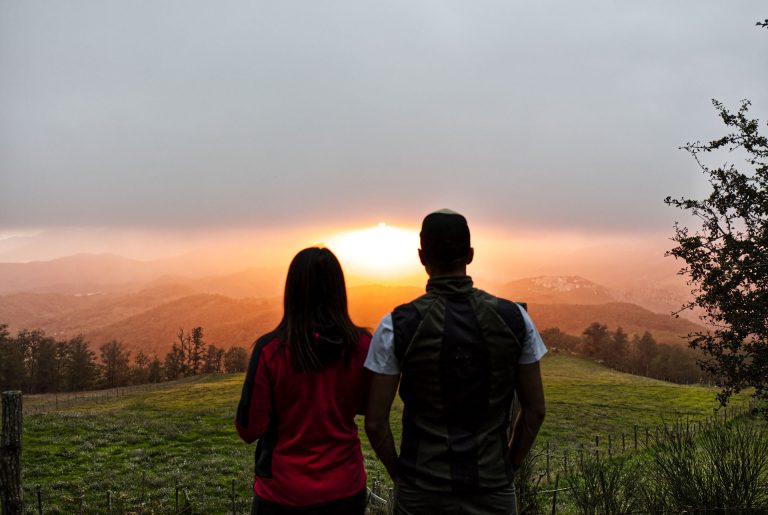
Walking here means inhabiting the landscape, allowing yourself to be transformed by what remains: a hidden hermitage, a rock church, a path through chestnut trees, a word spoken by those who live in these places.
No certainties or definitions are needed: just the desire to set out, to open a space.

On the traces of Italo-Greek monks. A spirituality that has crossed places, centuries, and silences

The Cammini Bizantini tell the story and spirituality of a territory through the events of Eastern monasticism and the most representative Italo-Greek saints. They gather the widespread legacy of the monks, who inhabited Southern Italy between the 9th and 13th centuries, leaving a discreet but profound presence.

Men on a journey, able to stop where the landscape allowed: a spring, a cave, a height. Places to pray, work, found communities.
They built monasteries, lauras, oratories, often hidden, always in dialogue with nature.

Their presence has deeply shaped the territory, leaving traces not only in places of worship, but also in place names, oral stories, and daily practices of communities.
A heritage that reveals itself by walking, listening, letting the landscape speak.

Walking today along those paths is a way to still hear that voice.
And to rediscover a form of spirituality that is profound yet accessible, secular or religious, that speaks to those seeking silence, connection, meaning.

The network of Cammini Bizantini

The network extends between Campania, Calabria, Basilicata, and Lazio, connecting hermitages, monasteries, villages, and paths: a thin thread that mends memory and landscape

It is built around the ancient connection routes between villages: historical trails and medieval roads, which today come back to life to unite inland territories, revitalize the Lucanian Apennines and strengthen the bonds between landscapes, communities, and memory.

Over 1,000 km of routes connect territories marked by the presence of Eastern monks: Rossano Calabro, birthplace of St. Nilus, Grottaferrata, where he founded the abbey that still lives, and then Cilento, Mercurion, the small Lucanian valleys.

Each path — the Cammino di San Nilo, the Cammino del Negro (and the upcoming San Saba)— is a cultural, spiritual, and human experience, built in dialogue with local communities.
Remember: here the landscape is not a background, but an interlocutor.
And the journey becomes a way to listen to it.

The Gazania Association

Gazania is the association that imagined and built the Cammini Bizantini. It is not just a promoting entity, but a living and rooted presence that works to reweave connections between landscapes, people, and narratives.

Its name comes from a flower that opens to the sun, even in the driest places. It’s an “image that well describes the spirit of the” association: making possibilities bloom where it doesn’t always seem possible. Preserving fragility, listening to stories, generating networks.

The “Association promotes an” idea of walking as education about the landscape, as an encounter between those who pass through and those who stay, as a space for transformation.

Gazania participates as a founding member in the broader Southern Paths Network, a group of entities collaborating to enhance internal areas through the culture of walking. It collaborates with the Campania Region, the Cilento, Vallo di Diano and Alburni National Park, the Bussento, Lambro and Mingardo and Vallo di Diano Mountain Communities, and with local municipalities for the promotion of slow mobility.


We walk alongside territories, not above them.

The values that guide us

A journey made of presence, listening, and relationship

Slowness

The natural rhythm of the landscape. An invitation to slow down, to listen, to see what otherwise escapes notice.

Spirituality

Not only religious, but profound. An “opening to” interiority, to meaning, to the silent presence of things.

Reception

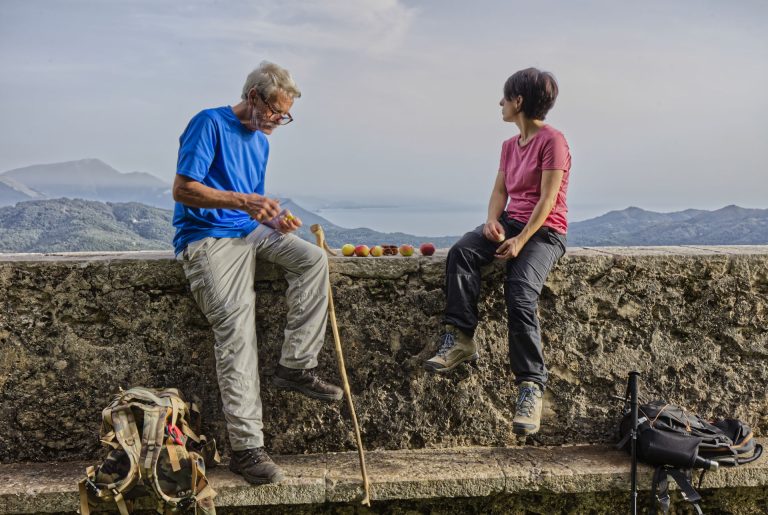
Every journey is also made of faces, encounters, voices. The community is part of the landscape, you will notice.

Care

Of places, stories, people. A tourism that doesn't consume, but preserves.

Simplicity

Few things, but true. No preparation needed, just the desire to depart.

A thought for those who leave. And for those who stay.

The journey is an invitation.
To slow down, to observe, to encounter.
To let beauty pass through you, one step at a time.
Every journey begins long before the first step.
And continues, even after the last stage.
You don’t need to have all the answers.
Sometimes it’s enough to start walking.

Latest news

Stay updated on all the news about Cammini Bizantini: events, initiatives, curiosities, and updates to make the most of the walking experience. Discover what “’s new along the route!”

timbri
Read more
guida seconda edizione
golfo di sapri
Read more
Camminatori sul crinale di Torraca
Read more
veduta tortorella
Read more
caselle riposo
Read more